Three-quarters of Canadian students use AI, but educators warn schools aren't preparing them for an AI-powered workforce
Canada NewsWire
TORONTO, Sept. 4, 2026
New KPMG survey finds widespread student AI adoption is outpacing AI readiness
TORONTO, Sept. 4, 2026 /CNW/ -- As students across Canada head back to class this fall, new research suggests schools are struggling to keep pace with artificial intelligence, a technology most students are using regularly. The KPMG Canada survey shows three-quarters of students use generative AI for schoolwork, yet nearly six in 10 educators don't believe Canada's education system is adequately preparing students for a future where AI is a standard workplace tool.
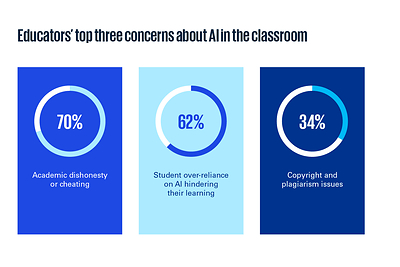
The survey findings highlight a growing challenge facing educational institutions as student AI adoption is outpacing AI guidance and training opportunities. Just over half (53 per cent) of students say they have received formal instruction on how to use AI responsibly for academic work, and even fewer (46 per cent) educators say students are currently receiving enough education about responsible AI.
"Many students already find AI as familiar as using a search engine or calculator for their assignments. The issue is that adoption happened faster than building the systems needed to teach students how to use these tools responsibly," says Rob Clayton, Partner and National Education Practice Leader at KPMG Canada. "Proper AI use is about more than knowing how to prompt. Students need to understand when AI can enhance learning and when they need to rely on their own judgment, analysis and critical-thinking abilities. Those skills will be essential as they enter an increasingly AI-enabled workforce."
The research shows that educating students on how to use AI responsibly is emerging as a critical priority for both instructors and their pupils. Nearly 80 per cent of educators believe students should receive explicit instruction on the responsible and ethical use of AI, while 70 per cent of students say schools should offer more courses on how to use generative AI.
Key survey findings
- 75 per cent of Canadian students use generative AI tools in their schoolwork
- 59 per cent of Canadian educators do not believe Canada's education system is adequately preparing students for a future where AI is a standard workplace tool
- 53 per cent of students say they have received formal instruction on how to use AI responsibly for academic work
- 46 per cent of educators agree students are currently receiving enough education about responsible AI use at their institution
- 79 per cent of educators say students should be explicitly taught responsible and ethical AI use
- 70 per cent of students say educational institutions should offer more courses on how to use generative AI
AI is transforming the classroom
Students are already avid AI users, with nearly 70 per cent using generative AI for school at least a few times per week. More than three-quarters say AI has improved the quality of their schoolwork, while 81 per cent agree that it has helped them better understand course material.
Yet, students are also experiencing negative impacts from using AI. Over half (51 per cent) say their critical thinking skills have deteriorated since they started using AI, while 69 per cent believe their peers rely on AI to avoid critical thinking altogether. Educators share these concerns, with 89 per cent agreeing that without proper guidance, students may be developing problematic habits that will impact their learning.
"Students will take what they learn in the classroom and will apply their behaviors into their workplace," says Jameel Ahamed, Partner and National Leader of Data Platforms and AI at KPMG Canada. "Educational institutions need to find new ways to challenge students to support their ideas, analyze and solve complex problems, and apply independent judgment. Whether through more project-based learning, oral assessments or interactive discussions, the goal should be to ensure AI enhances learning rather than becoming a substitute for it."
While AI adoption is slower among educators (46 per cent use it at least a few times per week), 77 per cent say the technology has caused them to change how they assess student learning outcomes. Respondents also noted that AI creates academic integrity challenges that are difficult to manage.
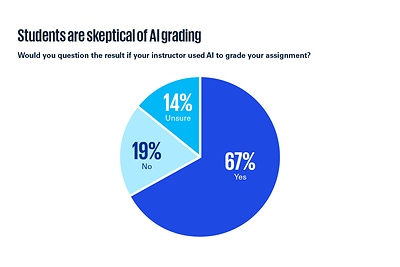
Indeed, the survey reveals that students and educators are divided when it comes to what they consider acceptable use of AI in the classroom. With 72 per cent of educators saying they believe using generative AI to assist with schoolwork constitutes cheating, compared with 50 per cent of students. And while students may have embraced AI for their own work, 67 per cent say they would question the result if their instructor used AI to grade their assignment.
"Educational institutions are entering a new phase of AI development," says Mr. Ahamed. "The question is no longer whether students are using AI. They already are. The challenge now is designing learning environments that encourage students to think, question, collaborate, and apply their knowledge in new ways. AI is prompting educators to reimagine how learning happens inside and outside of the classroom. The educational institutions that embrace this change will be in a better position to equip students with the skills and confidence needed to thrive in rapidly evolving workplaces."
Not all students have the same AI advantage
The survey also highlights growing concerns about fairness as AI becomes more deeply embedded in education.
Nearly one quarter of students now pay to access AI tools to support their schoolwork, and almost half believe students who pay for AI gain an academic advantage over those who do not. Meanwhile, 84 per cent of educators are concerned that unequal access to AI tools and training could create educational inequities.
"AI has the potential to make learning more personalized and accessible, but only if schools establish clear guidelines and policies that ensure everyone has the opportunity to benefit from these tools," says Mr. Clayton. "Establishing those foundations now will be critical to ensuring technology supports learning outcomes for all students, regardless of socioeconomic factors, while helping educators adapt to this new era of teaching and learning."
About the survey
KPMG Canada surveyed 1009 Canadians (aged 18+) who attend or work at university, college, vocational, or high school educational institutions from July 22 to August 5, 2026, using Sago's Methodify online research platform. In total, 1864 Canadians were screened for participation. The finding that 75 per cent of Canadian students use generative AI tools in their schoolwork is based on the full screened sample and reflects incidence among all students surveyed. Of the total students surveyed, 47 per cent attend university, 25 per cent attend college, 12 per cent are enrolled in post-graduate or part-time studies, 12 per cent are in high school, and four per cent are in technical, trade or vocational school. For educators, 63 per cent describe their job role as an instructor/professor, 19 per cent as a department head/curriculum lead, and 18 per cent work at the leadership or management level.
About KPMG Canada
KPMG LLP, a limited liability partnership, is a full-service Audit, Tax and Advisory firm owned and operated by Canadians. For over 150 years, our professionals have provided consulting, accounting, auditing, and tax services to Canadians, inspiring confidence, empowering change, and driving innovation. Guided by our core values of Integrity, Excellence, Courage, Together, For Better, KPMG employs more than 10,000 people in over 40 locations across Canada, serving private- and public-sector clients. KPMG is consistently ranked one of Canada's top employers and one of the best places to work in the country.
The firm is established under the laws of Ontario and is a member of KPMG's global organization of independent member firms affiliated with KPMG International, a private English company limited by guarantee. Each KPMG firm is a legally distinct and separate entity and describes itself as such. For more information, see kpmg.com/ca.
For media inquiries:
Alannah Page
National Communications and Media Relations
KPMG in Canada
(306) 934-6255
alannahpage@kpmg.ca

SOURCE KPMG LLP

